
The Rare Link
Weekly rare disease awareness, research & updates from RareLink — founded by students, driven by purpose. Week 3: JULY 17, 2026

Six students. One mission. Zero tolerance for rare diseases being ignored.
We are the founding team of RareLink, Saharsh, Umesh, SriAditya, Saurin, Aarush, and Arnav, and we built this newsletter because over 7,000 rare diseases exist in the world and less than 5% have a treatment.
Most patients go years without any diagnosis. Most families fight alone. Most diseases never make the headlines.
That ends here. Every week, The Rare Link brings you one disease spotlight, the latest research, and real stories from the rare disease community.
All we ask is simple: subscribe. Even if you only read occasionally, your support helps RareLink reach more people, amplify more stories, and bring greater awareness to rare diseases that have been overlooked for far too long.
Welcome. We’re glad you found us.
— The RareLink Founding Team
🧬 Rare Disease Spotlight: Hunter Syndrome
Imagine a child who seems healthy at birth, but a few years later begins facing repeated infections, hearing loss, stiff joints, breathing problems, developmental delays, and a long search for answers.
That is the reality for many families affected by Hunter syndrome, also known as mucopolysaccharidosis type II or MPS II. Hunter syndrome is a rare genetic disorder that affects many parts of the body and occurs almost exclusively in boys.
The disease is caused by changes in the IDS gene. This gene is responsible for helping the body make an enzyme needed to break down certain sugar molecules. When the enzyme does not work properly, those molecules build up inside cells and can damage organs, bones, joints, the airway, the heart, and sometimes the brain.
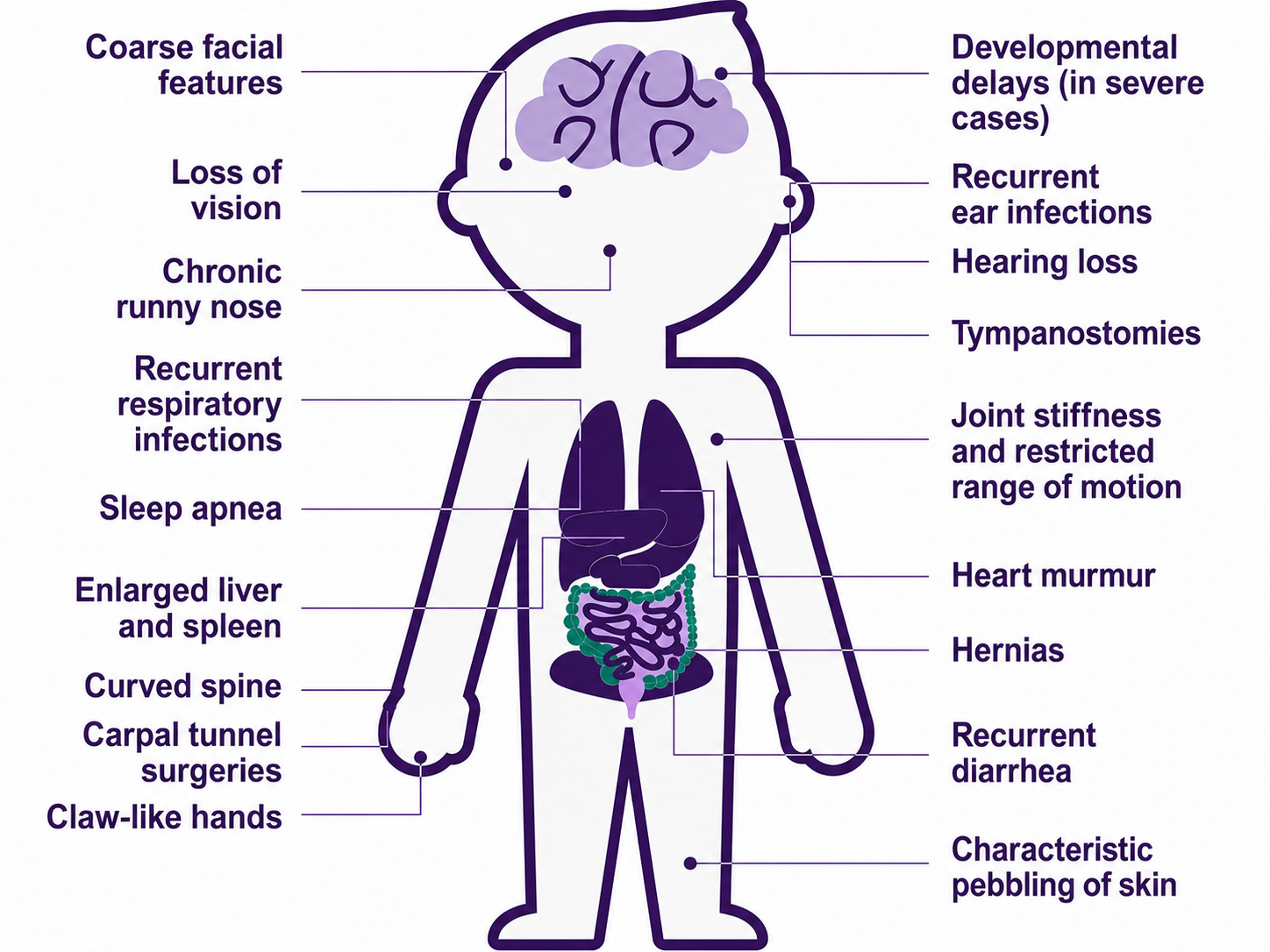
Hunter syndrome can look different from patient to patient, but symptoms may include an enlarged liver and spleen, joint stiffness, hearing loss, frequent respiratory infections, heart valve problems, delayed growth, and developmental regression in more severe cases.
What makes this disease especially difficult is that children may not show obvious signs at birth. Families can spend years moving between appointments, specialists, tests, and uncertainty before receiving a diagnosis.
Recently, Hunter syndrome has received more attention because of progress in treatment research. In 2026, the FDA approved Avlayah, a weekly enzyme replacement therapy for pediatric patients with neurologic symptoms of Hunter syndrome. This does not mean the disease is solved, and patients still need long-term care, monitoring, and support. But it does show why rare disease research matters.
For families affected by Hunter syndrome, awareness is not just information. It is recognition. It is support. It is hope.
That is exactly the kind of disease The Rare Link exists to talk about.
📰 This Week in Rare Disease
The rare disease world never stops moving. Here are three things worth knowing this week:
🔹 A new rare kidney disease treatment was recently approved — The FDA approved Trutakna for adults with primary IgA nephropathy who are at risk for disease progression. IgA nephropathy can damage the kidneys over time and may eventually lead to kidney failure.
🔹 Rare disease clinical trials are getting more support — The European Rare Diseases Research Alliance opened a 2026 clinical trial call to support multinational early-phase clinical trials for rare diseases. This matters because rare disease trials are often difficult to run when patient populations are small and spread across different regions.
🔹 AI is being studied as a tool for rare disease diagnosis — A recent research preprint introduced RaDaR, an AI model designed to help physicians recognize rare diseases earlier. AI cannot replace doctors, but research like this shows how technology may help shorten the diagnostic journey for patients and families.
These updates remind us that rare disease awareness is not just about learning the names of conditions. It is about understanding the barriers patients face and recognizing the research that could change their lives.
Sources: FDA, MedlinePlus Genetics, Reuters, ERDERA, rare disease diagnosis research preprint
🔗 RareLink Update
This week we’re doing a fundraiser with the Panera in Dublin (the one on Perimeter Loop) next Monday, July 20th.
Panera is donating 25% of the sales back to RareLink, which is huge for us. It runs from 4 PM to 8 PM, but if you order online or through the app, it actually counts for the whole day as long as you use the code FUND4U.
If you’re ordering in person at the kiosk or register, just show them a screenshot of this flyer so they know you’re with us.
Our team has started reaching out to local news sources, community newsletters, and Dublin-area publications to share our mission with a wider audience. As a student-founded nonprofit based in Dublin, Ohio, we believe our story can help bring rare disease awareness into more local conversations.
RareLink is continuing to build its platform through our website, Instagram, LinkedIn, and this newsletter. Our goal is to make rare disease education easier to access, easier to share, and harder to ignore.
Rare diseases may not always make the headlines, but with enough people learning and spreading awareness, we can help change that.
Want to follow our journey? Here is where to find us:
🌐 rarelink.org
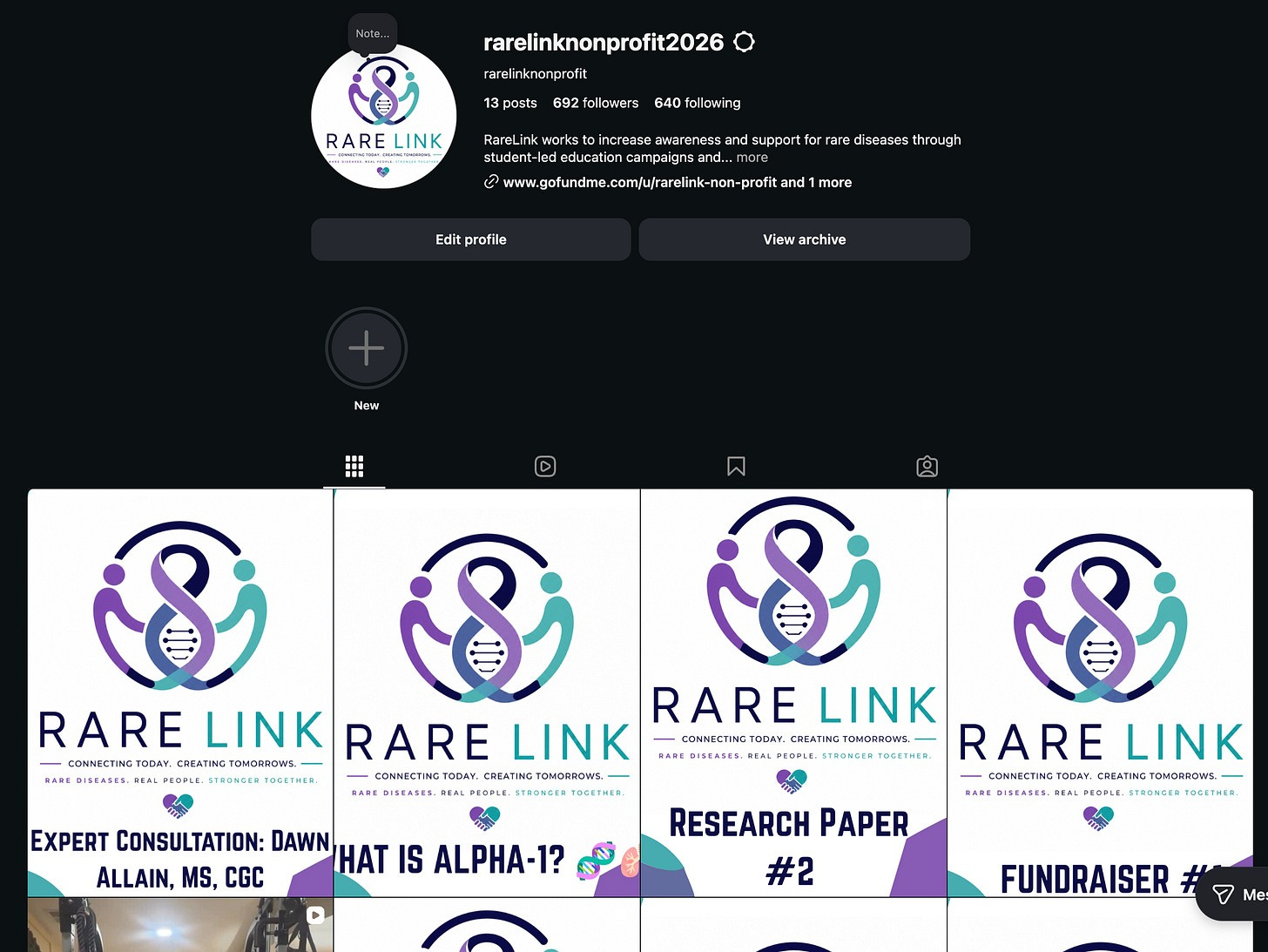
📷 instagram.com/rarelinknonprofit2026
💼 RareLink on LinkedIn
Click below to follow our Instagram and stay connected with RareLink. Every new follower becomes one more link in building a brighter future for the rare disease community.
💜 Get Involved
Rare diseases are rare individually, but together, they affect millions of people around the world. Every person who learns, shares, subscribes, or donates helps bring more attention to patients and families who too often feel unseen.
This week, you can support RareLink by sharing this newsletter with one person, following us on Instagram, or helping someone else learn about Hunter syndrome.
Remember, YOU are the missing link. One share can educate a family. One donation can advance research. Together, we can bring hope to millions living with rare diseases.
— The RareLink Founding Team